


How to Increase CIBIL Score?

Loading your search...
Credit score is an important three-digit number issued by a credit bureau depicting your financial health. This number represents your creditworthiness and is checked by the bank or any lending institution when you apply for a loan.

Credit scores are assigned by Credit Information Bureaus which maintain credit histories of people as provided by registered credit companies. Credit Information Bureau India Limited or CIBIL is the primary credit information company in India. It was founded in the year 2000 and since then has played a critical role in the financial scheme of the nation.
What is a Credit Score?
Credit score is a distinct number assigned to each individual based on an analysis of his/her credit report. Credit scores depict the creditworthiness of a person.
A high credit score is indicative of a good credit history and hence, is preferred. A good credit score signifies that a person repays his credit on time and this in turn aids in availing loans faster and at lower rates.
Credit score for any individual can lie anywhere between 300-900. A score of more than 700 is generally considered good while anything below that is not preferred by banks. Data indicates that loan applications are generally green for customers with a score of 750 and above.
A bad credit score, can ruin your chances of acquiring credit at good rates and sometimes acquiring credit itself can become a tough nut to crack.
How to Increase your Credit Score?
Credit score is an important number that show your creditworthiness. That is why it is essential to maintain your credit score. In case you have a low credit score, you can consistently work towards improving it. Read on to know more about the ways to improve your credit score:
Make timely payments on bills: Make your due payments on time is one of the simplest and easiest ways to boost your credit score. You may not see the results immediately, but over time, your credit score will surely improve.
Avoid multiple loans or credit cards: Borrowing multiple loans in a short-span and applying for too many credit cards, projects you as credit hungry. This has a negative effect on your credit score.
Choose longer loan tenure: When you opt for a loan with a longer tenure, it will shorten your EMI and ease your repayment burden every month. Though this may increase the amount of interest you pay in the long run, it will help you maintain a good credit history. It is advisable to take a calculated decision on the tenure of the loan.
Avail a right mix of secured and unsecured loans: Unsecured loans like personal loans and car loans generally negatively impact the credit score of a person. Secured loans like home loans, on the other hand, are invested towards asset creation and impact your credit score positively. Hence, you should try to minimize the unsecured component of your credit portfolio so as to influence your credit score positively.
Maintain a low credit utilisation ratio: Credit utilisation ratio is basically the percentage of your available credit limit that you are currently using. Having a high credit utilisation ratio shows that you depend too much on credit, which is not good for your credit score.
Check your credit report periodically: You should periodically check your credit report by applying for it on the CIBIL website. Check if all the information in your name is correct and up to date. If not, then report it to CIBIL immediately so that your credit score isn’t negatively impacted. When making payments on time or rectifying defaults and delays, ensure your credit card issuer or bank records and reports this to CIBIL.
Avoid closing old credit card accounts: The length of your credit history also has an impact on your credit score. If you have an old credit card where you have made timely payments, do not close or cancel your card. Your long credit history of timely payments will positively impact your score.
Factors that Negatively Affect your Credit Score
There are many factors that make or break your credit score. Some of them have been highlighted below.
- Payment history and the number and frequency of payment defaults or delays
- Total amount of debt held by you at any point of time
- Types of credit that you have availed e.g. personal loans, car loans, credit cards etc.
- Number of new credit requests made to different lending entities
- Utilization of your credit limit i.e. the amount of available credit that you have used
A Guide to Manage Your Finances
Managing your finances is extremely important for any individual. It helps you to achieve your future goals as well as lead a life peacefully. Read on to know more about some of the ways to manage your finances effectively:
- Plan your Budget: Everyone should be realistic as well as grounded when it is about managing your finances. Spending smart as per your monthly salary is vital to avoid the risk of being in debt. Also when you plan to shop make a list of items and figure out whether buying or spending that much amount will be feasible. All these precautions can really help you increase your savings.
- Validate your Credit Report: Monitoring Credit Report on a regular basis is important. Credit report explains all the factors in detail which can increase or diminishe your credit score. Knowing your faults can help you to avoid repeating them and later result in building a good credit report. You can also avail the free CIBIL score to know your current financial position.
- Reduce your Pending Amounts: Paying all the bills on time is important as it proves positive for your credit report. Clearing the outstanding amount on a monthly basis reduces the burden in future months. This can boost your financial position.
- Upgrade your Financial Knowledge: Everyone wants to enhance their savings. But many are not clear about the points that can dramatically impact ones financial hold. A good knowledge on credit report, interest deductions, and factors that boost your credit score can really help the credit score to go up.
How to Improve your CIBIL Score Immediately?
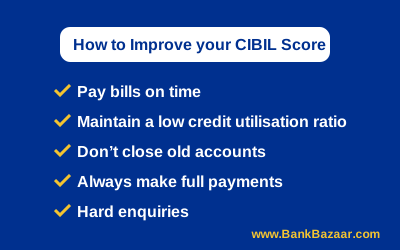
A CIBIL score is a numeric representation of an individual's creditworthiness. It is a three-digit number in the range of 300-900 that represents your creditworthiness. It is calculated after considering your credit history and repayment behavior. A CIBIL score of 750 and above is considered as ideal. Here's how you can improve your credit or CIBIL score immediately.
- Pay bills on time: Payment history accounts for 35% of your CIBIL score. Therefore it is important to pay all your monthly bills on time. Avoid delaying your payments as it negatively affects your CIBIL score.
- Pay off your debt immediately: If you have any unpaid dues, clear them off at the earliest even if they have been delayed for a long time. Missed payments on your credit cards will keep reflecting in your credit history until you pay them off completely.
- Maintain a low credit utilisation ratio: It is advised to not exhaust your entire credit limit and not spend over 50% of your credit card limit. The credit utilisation ratio accounts for 30% of your CIBIL score.
- Don't close old accounts: Do not remove or deactivate old accounts as it may harm your score if you have a good repayment history. Your old accounts could have a long credit history and deleting them will negatively impact your credit score.
- Always make full payments: It is important to pay the entire bill amount. Do not pay minimum amount due on your bills as it will reflect badly on your CIBIL score.
- Hard enquiries: When a lender or a bank checks your CIBIL score, the enquiry is termed as a hard enquiry. Multiple number of hard enquiries can bring down your credit score. Hence, make sure to limit the number of hard enquiries.
Quick Facts on Credit Score
- Availing services of a credit repair agency isn't a good idea since they cannot edit or remove any information from your credit report and as such have no control over your credit score.
- Your credit information is sensitive and confidential and should not be shared freely.
- CIBIL isn't authorized to make changes to your credit report independently. It only records the only when authorized by the concerned financial institution can CIBIL make such modifications.
- Study Abroad the Smart Way
- Truth About Pre-Approved Credit Cards
- How Long It takes To Improve Credit Score
Disclaimer
Display of any trademarks, tradenames, logos and other subject matters of intellectual property belong to their respective intellectual property owners. Display of such IP along with the related product information does not imply BankBazaar's partnership with the owner of the Intellectual Property or issuer/manufacturer of such products.


FAQs on Tips to Increase CIBIL Score
1.How can I increase my CIBIL score fast?
If you want to increase your credit score, you have to improve your credit story by paying loans and Equated Monthly Instalments (EMIs) on time and monitoring credit report.
2.How quickly can CIBIL score be improved?
It takes minimum four months and maximum 12 months to increase the CIBIL score as per your repayment history. Most of the banks and fintech companies will provide loans and credit cards to the borrowers who have credit score close to 750.
3.How much time will it take for my credit score to improve?
With timely payments and consistent efforts, your credit score can start improving positively within four to six months.
4.What is the minimum CIBIL score requirement to get a loan?
To avail a personal loan, you need to have a CIBIL score between 720 and 750. This score means that you have good history and lenders will give approval to your personal loan application. Not only this but also good history will help you get personal loans at low interest rates.
5.Will apply for too many credit cards have a negative impact on my credit score?
Yes, applying for too many credit cards in a short duration has a negative impact on your credit score.
CIBIL Score Requirements for Loans

Disclaimer
Credit Card:
Credit Score:
Personal Loan:
Home Loan:
Fixed Deposit:


Copyright © 2026 BankBazaar.com.